The Empty Chair at the AGM: Why Somebody Has to Take the Minutes
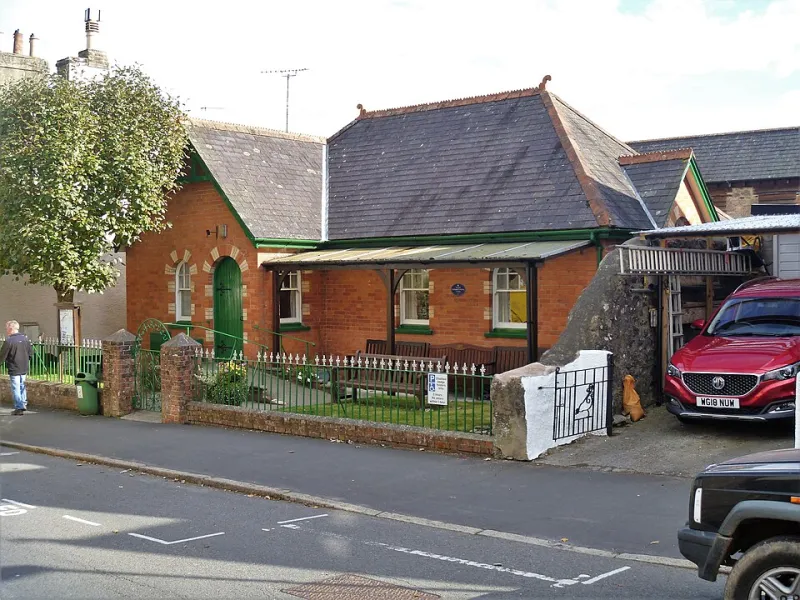
Photo: Michael Dibb , CC BY-SA 2.0, via Wikimedia Commons
There is a particular silence that falls over a village hall in November. The chairs are out, the biscuits are open, and the chairperson has just said the words every small club dreads: ‘So, we need a treasurer.’ Nobody looks up. Somebody studies the tea urn as if it contains the secrets of the universe. The raffle tickets suddenly become fascinating.
This is the 2026 AGM season in Britain, and it looks much like every other one. Not because people don’t care about their club. Most of them care enormously. It’s because the jobs that keep a club alive are the ones nobody dreams of doing. They are not the fun bits. They are the minutes, the receipts, the room bookings and the awkward email to the person who has been doing the tea rota since 2011.
The silence before the raffle
Ask anyone who has sat on a small committee and they will tell you the same story. The chair asks for a volunteer and the room develops a sudden interest in its shoes. The secretary — who is usually the person who has already done the most — makes a mental note to ask three people personally afterwards. The treasurer’s role is filled by whoever is least able to say no on a Tuesday evening.
It would be easy to call this apathy. It isn’t. It is usually fear. Fear of getting the bank account wrong. Fear of being blamed if the insurance renewal is late. Fear of standing up in front of people and saying, ‘I don’t actually know how this works.’ The unglamorous roles carry a quiet weight, and most of us would rather not pick it up in public.
The jobs nobody claps for
The chairperson gets the title, but the work is often shared across a committee that would rather be doing the fun stuff. The treasurer keeps the club solvent, chases receipts, watches the insurance date and explains — again — why the hall hire went up. The secretary writes the minutes, books the room, sends the emails and remembers that the key needs returning. The raffle-ticket coordinator is a real role in many clubs, even if it sounds like a joke. So is the person who does the safeguarding paperwork, the website, the social media, the tea rota and the lift to the station for the guest speaker.
None of this is glamorous. All of it is the scaffolding. The club that appears to run itself is a myth; it runs on somebody’s kitchen table, a folder of receipts and a calendar reminder that says ‘renew insurance — do not ignore’.
The gentle art of the ask
The secretaries I’ve spoken to are unanimous on one thing: a general call for volunteers rarely works. ‘Does anyone want to be treasurer?’ invites a room-wide stare at the floor. ‘Paul, you’re good with numbers and it’s one year — could you do it with me for the first three months?’ is a different question entirely. It is specific, finite and shared.
That last part matters. The one-year pledge is a remarkably effective trick. People will say yes to a single year when they would run from an open-ended commitment. Job-sharing works too: two treasurers, two minute-takers, a chair and a co-chair who split the meetings. Rotation helps as long as it is honest rotation, not the same three people rotating through every role while everyone else rotates the biscuit tin.
The arm-twist is not bullying. It is making the ask small enough to be possible. It is also making the handover real: a folder, a password list, a quick walk-through of the bank app, a note of who to ring when the hall’s boiler makes that noise again.
The awkward politics of the biscuit table
Every committee has its politics. There is the long-serving secretary who knows where everything is and cannot quite let go. There is the member who would be brilliant but has been asked too many times already. There is the newcomer who would happily help but has no idea how the club works and is worried about stepping on toes. There is the treasurer who has been doing it for fifteen years and would secretly love permission to stop.
A good AGM does not shame the long-serving. It thanks them, properly, and then asks what they would like to hand on. It does not pretend that admin is easy. It says, out loud, that the club needs someone to do the boring bits and that the boring bits can be shared. That is how small groups survive: not by finding a hero, but by making the job small enough that an ordinary neighbour can say yes.
Why unglamorous admin makes neighbourhood life possible
The reason the choir sings, the toddlers have a safe corner and the quiz night has a raffle is not magic. It is insurance, safeguarding, room bookings, a bank account and somebody remembering to print the sign-in sheet. Admin is the invisible neighbourliness that holds the visible neighbourliness together.
That is worth defending. A club without a treasurer is not free; it is one unexpected bill away from folding. A club without a secretary is not relaxed; it is a group of people trying to remember what was agreed last month. The empty chair at the AGM is not a small problem. It is the difference between a club that carries on and a club that quietly stops.
The kettle still needs someone
So if you are at an AGM in 2026 and the chair asks for a volunteer, do not immediately look at the floor. You do not have to be the loudest person in the room. You do not have to know how the bank account works on day one. You only have to be willing to learn, share the load and hand it on when your year is up.
Somebody will bring biscuits. Somebody will make the tea. Somebody, ideally, will take the minutes. And the club will still be there next November because of it.