The Shop That Sells Nothing: Inside the High Street's Quiet Revival
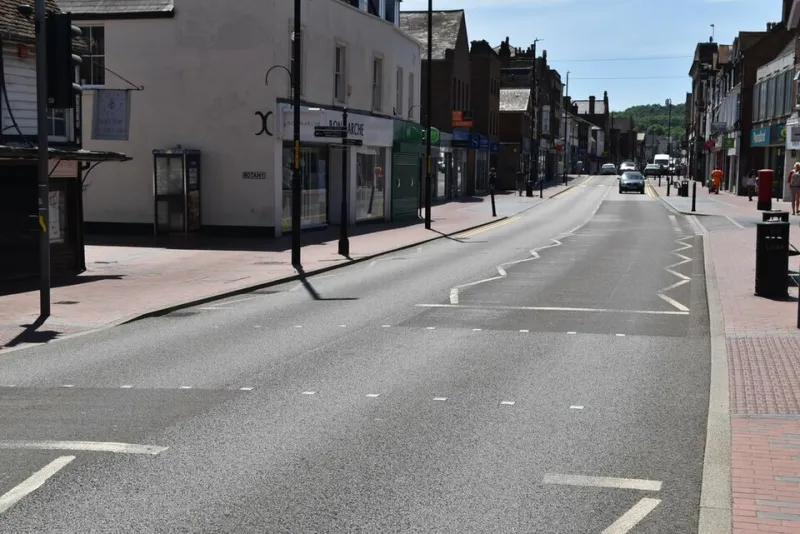
Photo: N Chadwick , CC BY-SA 2.0, via Wikimedia Commons
There is a shop on a side street in a West Yorkshire town that has not sold anything in eleven months. Its window still carries the ghost of an estate agent's vinyl lettering. Inside, though, on the second Saturday of every month, six tables are set out with soldering irons, sewing machines and a box of assorted plugs. Between twenty and forty people come through the door carrying broken toasters, torn coats and lamps that flicker.
It is a repair café, and it pays £40 a month in rent.
The unit with the taped-up glass
Scenes like this are playing out across the country in a way that rarely makes the news. A landlord with an empty retail unit, a council officer quietly anxious about a high street where three in ten shopfronts are dark, and a group of volunteers with a folding table and a public liability policy walk into the same conversation — and something gets signed.
'We had a choice between a unit that sat empty and a unit that had lights on in it,' says Gavin Thorne, who owns three small retail properties in a Lincolnshire market town. 'Empty shops attract damp, flyposting and occasionally people sleeping in the doorway. A club in there once a week keeps the place warm, keeps an eye on it, and makes the street look alive. It was not a difficult decision.'
That is the honest economic root of the pop-up club boom. Since empty property rate relief ends after three months for most retail units, a vacant shop can start costing its owner money simply by existing. A low-rent club solves a cash-flow problem and a public relations problem at once.
Meanwhile, on a meanwhile lease
The legal shape of these arrangements varies, but most sit in one of three buckets. A meanwhile lease is a short-term tenancy, often rolling month to month, with a break clause either side. A licence to occupy is looser still — less secure for the club, quicker to arrange. A handful of groups operate as guests of a landlord under a simple written agreement, which is the least formal and the least protective of everybody.
Ruth Ellery coordinates the repair café in that West Yorkshire unit. 'We started in a church hall and outgrew it,' she says. 'The landlord approached us, not the other way round. He wanted somebody in before the rates kicked in. We agreed three months, then three months again, and we've now been there nearly a year.'
Her advice to anyone in the same position: get it in writing, however friendly the conversation. 'A WhatsApp message saying "yes, use the shop" is not an agreement. You need to know who pays the electricity, who holds the keys, and what happens if the unit gets sold.'
The paperwork nobody warns you about
Here is where most enthusiastic groups come unstuck, and it is worth being blunt about the list.
Public liability insurance is the first thing any landlord or council will ask for, usually at £5 million cover. For a small unincorporated club this typically costs somewhere between £80 and £300 a year through a specialist community insurer. Shop around and read the exclusions on electrical work.
Risk assessments sound terrifying and are usually two sides of A4. Fire exits, trailing cables, hot kettles, step-free access, who calls 999.
Portable appliance testing matters the moment you fix anything mains-powered. A repair café that returns a faulty kettle to its owner without a PAT check is one accident away from a very bad year.
DBS checks are essential if you run anything with children — the after-school craft hubs springing up in former card shops are the fastest-growing version of this model, and they need enhanced checks for regular volunteers.
Business rates catch people out. Small business rate relief can take the bill to zero, but it is not automatic and the paperwork is unforgiving. Councils will often point a new group in the right direction, but someone has to ask.
Change of use rarely bites for occasional community use, but a club operating five days a week in a former retail unit is a different planning question. Ask the planning department early, in writing.
What the council actually gets out of it
'We are not in the business of running shops,' says Priya Raman, a town centre manager in the East Midlands. 'But we are absolutely in the business of footfall. If a book swap brings forty people into a street on a Saturday morning, half of them buy a coffee and a paper. That is the whole argument in one sentence.'
Her team keeps a register of vacant units and a matching list of community groups looking for space, and brokers introductions. Several councils now do something similar, occasionally sweetened with small pots of regeneration funding — a few hundred pounds for shelving, a kettle and a fire extinguisher.
What councils tend not to have is patience for groups who take a unit and then leave it dark. 'If you only open one afternoon a month, the street still looks dead,' Raman says. 'We encourage people to share a space between two or three groups so the lights are on more often.'
The volunteer rota is where good ideas go to die
Every organiser we spoke to raised the same fragility. Not rent, not insurance — rotas. A club that depends on four people will fold the moment two of them go on holiday.
Ellery's repair café runs two-hour shifts with a buddy system, so nobody is ever alone at the door. 'We ask for one session every six weeks, not every week,' she says. 'The moment you ask for weekly commitment, the volunteers evaporate. And we always have cake, which is embarrassingly effective recruitment.'
She also warns about the founder trap: build something that can survive you getting flu in February.
A starter guide for your own street
1. Count the empty units. Walk your high street and note which shops have been dark for months. The estate agent's board will name a contact.
2. Decide what you actually are. A monthly repair café, a weekly book swap and a term-time craft club need very different spaces and insurance.
3. Find two allies. One other organiser, plus somebody who knows the landlord or the council.
4. Ask the council first. Town centre teams and economic development officers are usually delighted to be asked.
5. Be specific with the landlord. Say which days, which hours, what you'll pay, and what you'll do about insurance — before they ask.
6. Insure before you open. Not after. Community insurers can quote in a week.
7. Write a one-page risk assessment and pin it by the door.
8. Go for a short arrangement. Three months rolling is fine. Prove it works, then negotiate.
9. Share the space. Two groups using one unit keeps the lights on and halves the cost.
10. Tell the street. A hand-painted sign in the window beats a social media post every single time.
The shops that line our high streets were never only about selling things. They were where people bumped into each other. Turning a few dark windows back into warm ones will not fix retail — but it does mean the light comes back on, and in November that counts for rather more than we usually admit.