Count the Chairs, Not the Couples: A Club Christmas Meal That Works for Everyone
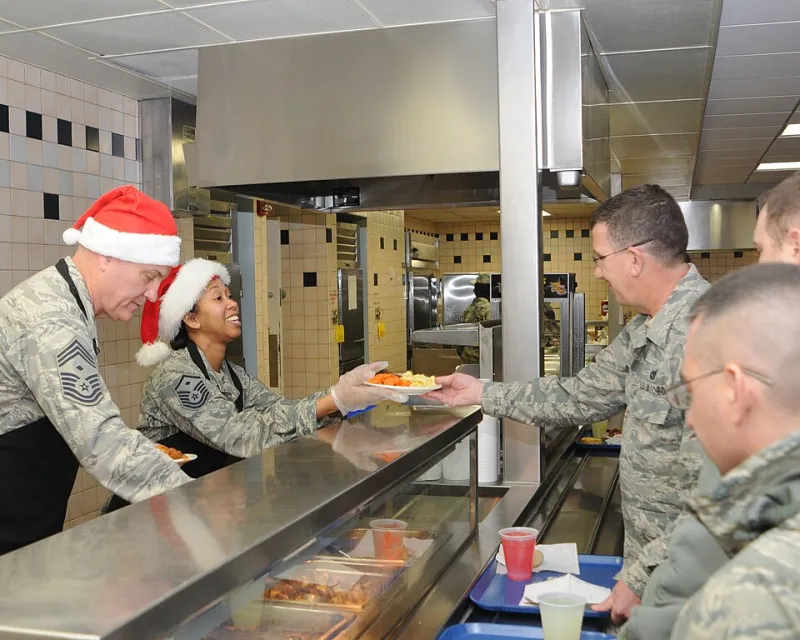
Photo: US Air Force from USA, Public domain, via Wikimedia Commons
Every club Christmas meal begins with a list and a small piece of arithmetic. Twenty-three names, tables of eight, one pub back room, and a deadline for the caterer. Somewhere between the first yes and the final mince pie, the numbers stop behaving. Someone's partner is now coming. Someone else has gone quiet. Two members would rather arrive late than walk in alone. The odd number is not a problem to solve. It is the normal shape of a club.
Count the people, not the place settings
Start with a real list in the first week of December 2026. Not a rough idea of who usually turns up, but names, dietary needs, and whether someone is coming on their own. Add a column for anyone who might need a lift or a quieter arrival. Keep it simple and keep it private. The point is not to build a dossier. The point is to notice the person who has said yes but has not said who they are coming with.
Then look at the venue. A village hall, a pub function room, a working men's club, a church hall with the good chairs: each has its own geometry. Tables of eight or ten are usually kinder than one long trestle. Round tables let people turn to a neighbour without having to shout down a line. If the room only has long tables, break them into shorter runs and leave gaps for chairs to pull out. An odd number at a table is fine. It gives the host somewhere to sit and leaves room for a late yes.
A table plan should be a light touch
A club Christmas meal is not a wedding reception. There is no top table, no speeches before the soup, and no need to pair people off like place cards in a period drama. Use first names on the cards, not titles or couples' names. Mix the tables enough that people meet someone new, but do not create a singles table and do not herd all the quiet members into one corner and hope for the best.
A better approach is to ask two or three friendly members to be table anchors. Their job is not to entertain. It is to be early, to know who is sitting near them, and to make one introduction. That is enough. A table anchor can say, 'You're next to me, I'm Alan, I'll get you a drink.' It is a small thing, but it saves a newcomer from doing a lap of the room with a folded coat.
The quiet arrival needs a name
Put one person at the door from fifteen minutes before the start. Not a greeting committee. A host. Their job is to welcome people, take coats, and walk anyone who looks unsure to their table. 'You're at table four, I'm Jo, follow me' works better than 'Just find a seat anywhere.' The second instruction is friendly in theory and terrifying in practice.
The host should also know the quiet corner. Some people need to step out for air, take a call, or simply pause before joining the noise. Leave a chair near the door and do not block the route to the bar with a stack of spare chairs. A room that is easy to leave is also easier to enter.
Buy the spare cracker
Order two or three extra crackers. Not because the club expects disaster, but because odd numbers are normal. A spare cracker means no one has to sit with their hands in their lap while the rest of the table pulls. The host can pull with the person left over, or a table anchor can say, 'We've got a spare, pull with me.' No announcement. No fuss. It is just paper, a hat, and a small useful kindness.
The same goes for a spare chair. If the final count is twenty-three and the tables seat eight, do not spend the evening apologising. Set three tables of eight and one of seven, or two tables of ten and one of three with a host. An odd table is not a failure of planning. It is a room with room in it.
The host's job is small and specific
One named host is better than a vague committee. That person holds the list, the dietary notes, the spare crackers and the venue's phone number. They brief the table anchors. They know who is arriving alone and who might need a lift home. They do not have to be the loudest person in the club. In fact, the best host is often the person who notices things quietly and acts before anyone has to ask.
A named host also gives everyone else someone to point to. If a member rings on the day to say they are running late, there is a person to tell. If the caterer needs a final number, there is a person to answer. The role is not about control. It is about removing small uncertainties so the rest of the room can relax.
Keep the numbers flexible
December weather, illness and family plans will move the list. Keep the plan flexible. If someone drops out, do not redraw the whole room. If someone joins late, add a chair and a cracker. The meal will not be remembered for whether the tables were symmetrical. It will be remembered for whether people felt expected.
That is the odd-number plan in one sentence: make people feel expected, not fitted in. Count the chairs, not the couples. Buy the spare cracker. Name the host. Then let the room do what clubs do best, which is to make an ordinary Tuesday in December feel like somewhere worth being.